


Lace may not be the first material you think of for bag making—but once you try it, it opens up a whole new way to think about design.
In collaboration with Madalynne Intimates, we took the Gwen Bag Pattern and added lace appliqué accents that feel elegant and high-end, yet easy to apply. This bag was created to pair with Madalynne’s brand-new pattern—The Lexee Corset Dress and Blouse—so you can create a cohesive outfit.
If you’ve been curious about incorporating softer details into your bags—or just want to try something a little more elevated—this is a great place to start.


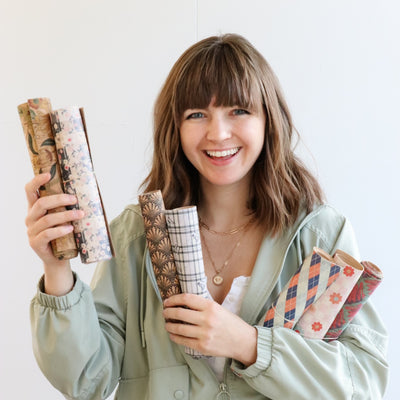
Meet Madalynne
Madalynne is known for her thoughtful approach to sewing—especially when it comes to lace, fit, and fine details.
After learning to sew as a teenager, she apprenticed under a former Dior seamstress and went on to build a career in fashion and education, working with brands like Urban Outfitters before launching Madalynne Intimates full time. Today, she shares that experience through lingerie patterns, online classes, workshops, and her book Sew Lingerie.
Her work focuses on helping sewists feel confident working with more delicate materials, while still keeping the process approachable and enjoyable.

Sew the Look: Coordinating the Dress and Bag
For this collaboration, we designed the Gwen Bag to complement one of Madalynne’s dress patterns, the Lexee Corset Dress and Blouse, using a coordinating floral canvas, called Mystic Garden Watercolor, and Off White Beaded Applique Lace.
The goal was to create a cohesive outfit that feels chic and easy to wear. We paired soft details, like the lace, with more structured materials like faux leather, canvas, and metal bag hardware.
Sewing the pieces to go together creates a finished look that’s perfect for everything from brunch to an evening out.
If you’re planning to make your coordinated set here are some tips to consider when planning your materials:
Repeating one main fabric or one color between the dress and bag
Using lace in both pieces, even if it’s applied differently
This approach works beyond this project too. Carrying details from one piece to another is a simple way to make your handmade wardrobe feel more complete.

Lace in Everyday Style
Lace has been showing up more in everyday fashion—especially in pieces like tanks, dresses, and layering details that mix soft textures with more structured styles.
This aesthetic is what inspired our collaboration with Madalynne—bringing her Lexee Corset Dress and Blouse pattern, fabric, and lace together with a coordinating, chic bag to create a cohesive, fashion-forward outfit.
Pairing lace with materials like faux leather and canvas creates a beautifully balanced look, by blending something soft with something structured. Plus, it’s a simple way to add interest without changing how the bag is constructed.
If you’re already drawn to this look in apparel, incorporating lace into a bag is an easy way to carry that style into your handmade pieces!

Using Lace for Bag Making
Lace adds contrast in a way that feels natural—it softens structured materials like faux leather and gives the project a more feminine, thoughtful look.
The key is how it’s integrated into the design.
When planning lace appliqué, start by looking at scale and placement:
Choose a lace pattern that fits the size of your bag panel. Larger motifs work well on totes or larger fronts, while smaller, more delicate designs suit pouches or compact styles.
Position the lace so it feels balanced within the shape—centered, mirrored, or aligned with seams are all strong starting points.

Next, consider what’s happening around the lace:
Keep nearby details minimal so the lace has space to stand out
Avoid layering multiple focal elements (like bold hardware, contrast panels, and lace all in the same area)
If needed, simplify parts of the pattern—removing a pocket, skipping extra accents, or choosing a subtle print or texture
For this collaboration, we kept the base design simple and allowed the lace to take the lead.
This same approach works across a variety of bag styles:
A tote with a clean exterior panel or large pocket
A crossbody with a simple front or flap
A pouch or wallet with a smaller, subtle appliqué detail

If you’re trying lace for the first time, start with a simple silhouette and focus on one well-placed detail. Once you see how it interacts with your materials, it becomes much easier to incorporate into future projects.
Maddie’s Advice on Lace Placement
I think about lace as an accent, not the entire story, so I start by choosing one or two focal areas—like bra cups, neckline, sleeves, or hem—and let everything else support that. Negative space is just as important as the lace itself; leaving areas clean helps the details stand out more. I also pay attention to the scale of the lace motif and how it pairs with the fabric so nothing feels visually heavy. When in doubt, I step back (or even take a photo) to see if my eye knows where to land first.
Choosing Materials That Work Together
When you’re adding lace to a bag, the surrounding materials matter just as much as the lace itself. The goal is to create balance so each element has a purpose.
For this version of the Gwen Bag, we selected materials that complement one another:
Madalynne’s Mystic Garden Watercolor Canvas to tie the bag back to the Lexee Corset Dress and Blouse for a cohesive, put-together finish
Hazelnut Pebble Faux Leather for structure and warmth
Striped Neapolitan Webbing to pull in the colors of the print and contrast
White zipper tape with a gold coil for a clean finish
Off White Beaded Applique Lace to soften the overall look
If you’re trying this technique with another pattern, start simple. A clean base and a few well-matched materials will let the lace stand out in the best way.

Gwen Bag Design Adjustments
To highlight the lace detail, we made a few simple changes to the original Gwen pattern.
We Omitted
The exterior zipper pocket
Interfacing
Optional tassel and label
We Added
The lace appliqué centered on the front and back
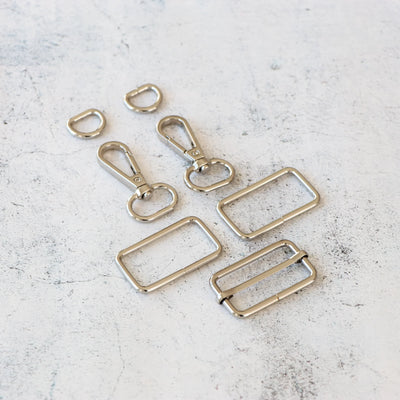
Chicago screws for a clean, adjustable strap connection
Why These Changes Help
Removing the exterior pocket allowed the lace to stand out.
Skipping interfacing reduced bulk since we chose to use a heavy-weight canvas for the exterior.
Keeping the design simple helped everything feel more intentional.
These are small adjustments, but they made a big difference—and you can apply the same reasoning to other patterns too!

How to Add Lace Appliqué to a Bag
1. Position the Lace
Lay your lace on the panel before attaching anything. Move it around until it feels balanced with the shape of the bag.

2. Lightly Secure Lace
Use a small amount of fabric glue, washi tape, pins, or a few basting stitches to hold it in place.

3. Strategically Topstitch to Secure in Place
Instead of sewing around every edge, focus on anchoring key areas so the lace stays in place but still looks soft. We recommend using a clear thread or matching the thread color to your lace to blend into the lace for a seamless finish. Depending on the lace design, use a narrow zigzag stitch or straight stitch in specific areas to secure the lace in place.

Madalynne’s Tips for Attaching Lace
First and foremost - I pin or use a temporary spray adhesive to place the lace motif. Then I sew it down using a narrow zigzag or small straight stitch, depending on the height of the scallop edge. If the scallop edge is straighter, I can use a straight stitch. If it has a more pronounced high point and low point, I use a zigzag stitch, pivoting my needle when I reach a low/high point.
For stretch lace, I always test on scraps to make sure I’m not distorting the fabric as I sew. Trimming away excess fabric underneath after stitching can help the lace feel more integrated and less bulky. And taking the time to align motifs symmetrically—especially on bras—makes a huge difference in the final look.
If you doubt sewing lace applique by machine, you can always hand stitch it down. That will give you the most control and a couture touch.
Using This Technique on Other Bag Patterns
Once you get comfortable with lace appliqué, you’ll start to see where it can fit into other projects.
It works especially well on:
Larger panels where the design has space to stand out
Simple silhouettes that don’t have a lot of competing details
Smaller accessories where you want just a hint of texture

Upgrade Your Bag Strap
The strap may seem like a simple, functional detail, but it’s also a great opportunity to bring the whole design together—or make the bag more comfortable to carry.
For this version, we used the Make A Strap pattern with webbing, faux leather accents, and coordinating hardware to create a more polished, boutique-style finish.
This strap style adds:
Strength: Webbing provides durability and support for everyday use
Comfort: A wider strap helps distribute weight more evenly on the shoulder
Cohesion: Repeating materials and hardware from the bag ties everything together
When the strap matches the level of detail in the bag, the whole project feels more complete.

Features of the Gwen Bag
The Gwen Bag is a great base for trying techniques like this because of its simple, structured shape.
Finished Size:
8-1/2" diameter × 2-1/2" deep
Features:
Circular shape
Top zipper closure
Contrasting accents
Handle and crossbody strap
Several pockets
Options for hardware upgrades

Ready to Give It a Try?
Working with lace is a great way to explore a new technique. Start with a simple design and take your time with placement and topstitching.
If you give this technique a try, we’d love to see how you use it on your own projects! Be sure to tag @sallietomatopatterns and @mmadalynne on social media!



Leave a comment